Start here and take a step back in time

A story of the people, who are shaped by the sea

Mi'Kmaq & First Nations

Yarmouth & Acadian Shores was first settled by the Mi'kmaq natives. The Mi’kmaq arrived in Atlantic Canada approximately 10,000 years before the Europeans, and had settlements mainly along the coast. Mi’kmaq territory was divided into seven regions, each with its own government and rules. Yarmouth & Acadian Shores was part of the area known as Kespuwick.

The Mi’kmaq were largely nomadic in their lifestyle before European settlement in the Maritimes. The spring and summer were often spent in coastal areas where the sea provided an abundance of fish. In the winter months they often migrated inland along the various river systems for hunting and shelter. Two sites in Yarmouth & Acadian Shores, Tusket Falls and Chegoggin, have been found to be rich in Mi’kmaq artifacts which suggests that these settlement sites were returned to by the Mi’kmaq year after year.

The Mi’kmaq were most likely first introduced to the Europeans in the 1500s, as Europeans arrived in Nova Scotia to fish for the summer. A positive relationship developed, and the Mi’kmaq developed even stronger relationships with the French after their arrival in 1605.

Map of Nova Scotia pre 1755

A map depicting Acadian settlement locations in Nova Scotia, prior to the deportation in 1755.

[+] View larger map

A map depicting Acadian settlement locations in Nova Scotia, prior to the deportation in 1755.

The French were the first permanent European settlers in North America, arriving in Nova Scotia in 1605. They named the area “Acadie” (meaning paradise), and the settlers became known as Acadians. Acadians lived in farming communities in the Annapolis Valley and Minas Basin, along the present-day Bay of Fundy, and also had several small settlements in present-day Yarmouth & Acadian Shores. Although the Acadians were originally from France, their ties with France lessened and they became quite attached to their new home. They were granted neutrality in the many wars between France and England for control of Atlantic Canada, with the condition that they wouldn’t raise arms and would be allowed to practice their religion.

Many of the Acadians living along the Bay of Fundy were farmers, while many of the Acadians in Yarmouth & Acadian Shores were fishermen. For 150 years, the Acadians lived in relative peace and prosperity. The first Acadian to settle in Yarmouth & Acadian Shores was the Baron Sieur Philippe Mius d’Entremont, and he established the community of Pubnico in 1653. Several other Acadian settlements were established, including north of Pubnico at Chebogue, and south of Pubnico into the present-day Cape Sable area.

In 1755, control of Nova Scotia fell into the hands of the British, and the British demanded the allegiance of the Acadians. This had occurred many times over the previous century, and was not expected to change normal day-to-day life that much. There were approximately 50 Acadian families living in Yarmouth & Acadian Shores & the Cape Sable area by 1755.

Deportation of the Acadians

An artistic rendering of the deportation by Nelson Surette

An artisitc rendering of the deportation entitled "Burn and Lay Waste", by Yarmouth native Nelson Surette.

[+] View larger image

In 1755, the British surprised everyone by forcibly deporting every Acadian man, woman and child, including those who had signed allegiance to the British throne. In the fall of the year, approximately 2200 Acadians were deported from Nova Scotia at Grand Pre, along the Bay of Fundy. While embarking on the ships, many families were separated, never able to find each other again. Others escaped into the woods and wandered for many years throughout Eastern Canada driven by the fear of being caught. This time is also known as the expulsion or “le Grand Dérangement.”

The deportation in Yarmouth & Acadian Shores and Cape Sable took place over several years, in 1756, 1758 and 1759. Some Acadians managed to retreat into the woods for safety, but it is believed that many, if not all, Acadians in this area were removed by the British.

The deported Acadians were sent to the Eastern Seaboard, but many were denied entry, became enslaved or perished. They tried returning to France, but after a 150 year separation from Europe, the Acadians did not have much in common with feudal France and longed to leave. Some Acadians attempted to resettle in Québec, while others ended up in Louisiana and became known as Cajuns. The Cajuns were free to practice their religion and own land. After ten years, many Acadians still considered themselves without a home and longed to return to their beloved Acadie.

Arrival of the English

A collection of yarmouth sea captains, from 1893

A collection of yarmouth sea captains, from 1893

[+] View larger image

After the deportation, control of Nova Scotia lay in the hands of the British, and an aggressive settlement plan began. English speaking settlers from New England, known as the Planters, arrived in Nova Scotia in 1760, and settled extensively along the Bay of Fundy on the lands formerly occupied by the Acadians. These lands were then permanently lost to the Acadians.

Planters arrived in Yarmouth & Acadian Shores at Chebogue in the fall of 1761. These families included the Perry’s and Landers, and were descendents of the original Mayflower settlers. The Planters settled primarily in and around the present Town of Yarmouth, and in scattered communities south of the Town. Trade with New England, along with fishing and farming, would lead the Town to immense wealth in the late 1800s.

Return of the Acadians

Shortly after the arrival of the Planters in Yarmouth & Acadian Shores, the seven year war between England and France ended, and Acadians were granted permission to return to Acadie to settle. Finding their former homes in the Bay of Fundy occupied, they found rocky land near the ocean, and were forced to scatter throughout the Maritime Provinces.

Two separate Acadian communities were established in Yarmouth & Acadian Shores at this time. North of the Town of Yarmouth, the township of Clare was established for Acadians in 1768. A group of 12 Acadians had tried to escape the deportation in this community in 1755, but succumbed to the harsh winter weather. By the late 1760s, the Acadians were better prepared and settled in villages along the sea, such St. Bernard, Grosses Coques and Petit-Ruisseau (Little Brook). Although they tried farming, the soil was too rocky, and they quickly turned to the woods and sea to make a living. The Acadians became woodsmen, shipbuilders and fishermen. As the large Acadian families grew, the Acadian settlement spread southwards towards the community of Salmon River.

South of the Town of Yarmouth, a similar story was unfolding. A chance encounter in Halifax by some descendents of the Baron Sieur Philippe Mius d’Entremont resulted in an official proclamation allowing this family to return to their former land in Pubnico. They immediately returned, and other Acadian families quickly followed suit. The Acadian families settled in Pubnico and northward along the shore, mixed in between English-speaking villages. These Acadians once again turned to the sea for a living, and became fishermen and ship builders. Pubnico is the only Acadian village in the world that was resettled by Acadians after the deportation.

Two Cultures Surviving and Thriving

Old map of Acadie

An old map of Acadie

[+] View larger image

Throughout the late 1700s and 1800s, the Acadian communities were extremely self-sufficient and independent. Interaction with the English-speaking Town of Yarmouth was minimal, and the two separate Acadian communities were not very interconnected, due to the long travel time between them. This isolation allowed the Acadians to maintain their language, religion and cultural identity. Roman Catholic parishes were established, families grew in size, and the first Acadian was elected to the Nova Scotia legislature in 1836. Although the Acadian communities did not become wealthy, they had returned and survived.

The English-speaking settlements in and around the town of Yarmouth grew in size and prosperity during the 1800s. Being from Boston, the Planters naturally traded with Boston for the manufactured goods they required. The sea provided fish as well as a highway to transport goods to market. Men from Yarmouth traveled the world, and brought back goods and wealth to the town. Ferry service with New England began in 1855 and established international tourism in the area.

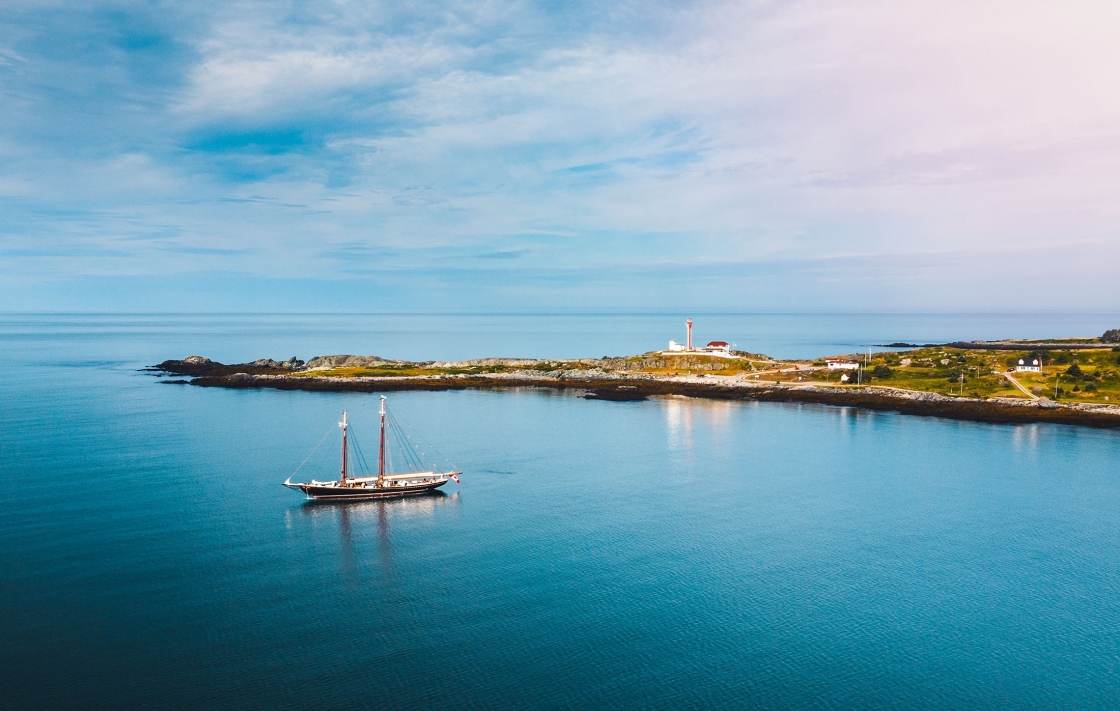
Yarmouth reached its peak as a ship-owning port in 1879, and was the second largest port of registry in Canada. At this time, Canada was the fourth leading maritime nation in the world. The Town of Yarmouth blossomed, with the construction of ambitious public buildings, schools and churches. Cultural life and recreation were not forgotten—there were literary societies, musical and theatrical groups and sports organizations. Large elaborate homes and businesses were constructed by seafarers and merchants, a testament to the wealth that the Town had generated.

Tied to the Sea

Yarmouth Harbour 1910

Part of the busy Yarmouth waterfront, circa 1910

[+] View larger image

Interactions and community ties between the Acadian communities and Yarmouth began to increase in the 1900s. While shipping began to steadily decrease in importance in the late 1800s, ties to the sea kept getting stronger in all of the communities within Yarmouth & Acadian Shores.

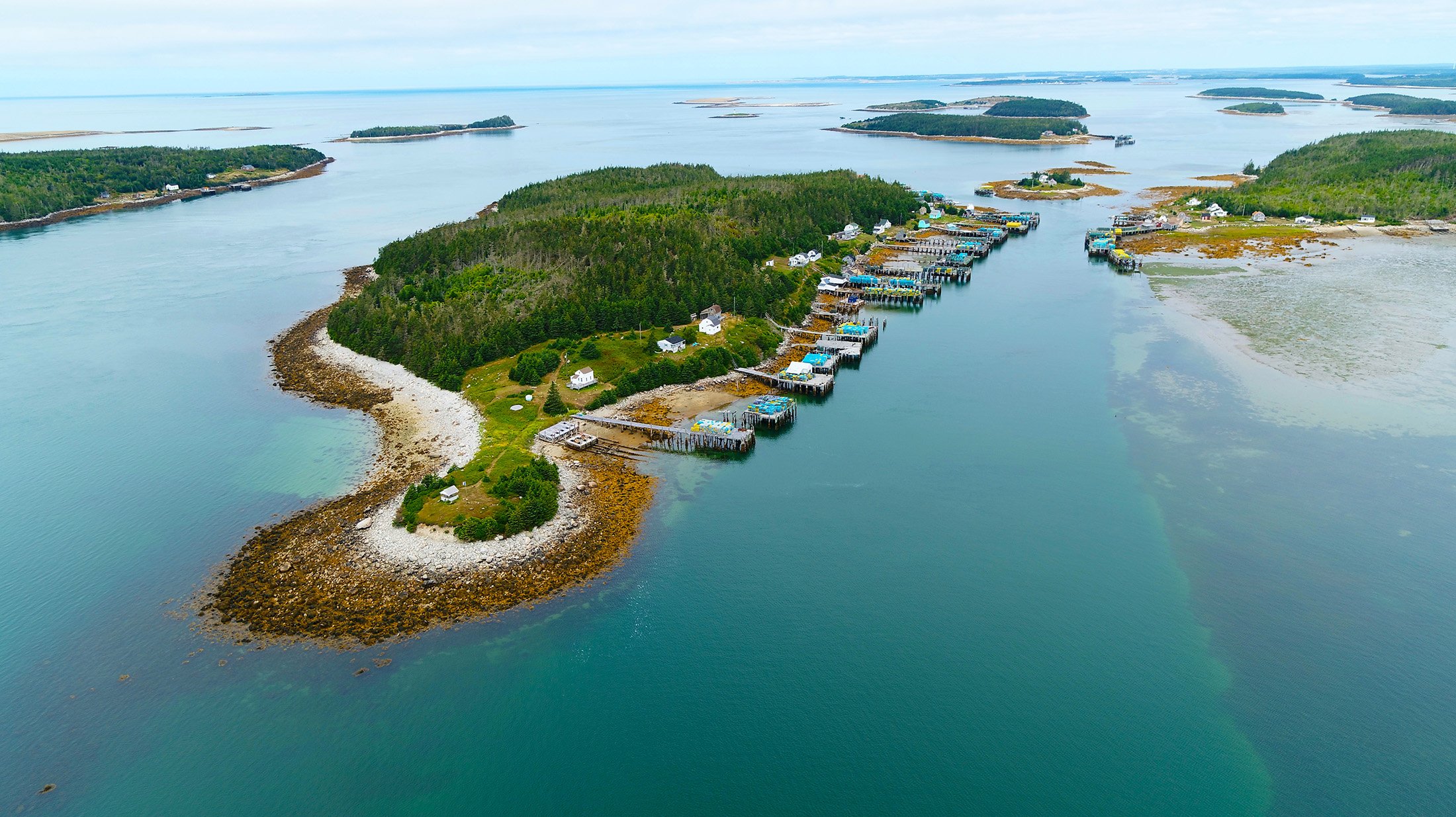
Lobster was a staple of the diet in Yarmouth & Acadian Shores, as it was plentiful. People were able to harvest lobster by walking out to the flats during low tide, and would come back with a bucket full. It would also wash up on the beach after strong winds. However, lobster was considered poor man’s food and was also used as fertilizer. In the early 1900s, live lobster developed a market, and the shipping of lobster from Yarmouth & Acadian Shores to New England began. A new commercial industry was born, and helped to shape this area.

Profits from lobster fishing reached unprecedented levels in the 1980s, and Yarmouth & Acadian Shores experienced resurgence in wealth. Although this would never reach the proportions of the 1800s, it has provided economic stimulus that carried the area when other manufacturing industries shut down and moved elsewhere.

Modern day Yarmouth

Today, Yarmouth & Acadian Shores is home to the largest fishing industry in Atlantic Canada, and the largest lobster fishery in the world. This has led to many other industries within the area, including shipbuilding and harvesting of other fish species.

International commerce and globalization has encouraged stronger community and family ties between the communities of Yarmouth & Acadian Shores. The Acadian identity is still very strong, with approximately 50% of all residents identifying themselves as Acadians and speaking French as their first language. There is a small band of Mi’kmaq First Nations people, and they belong to Acadia First Nations. The remainder of residents within Yarmouth & Acadian Shores are English-speaking, and many can trace their heritage back to the New England Planters. As the community looks towards growth and prosperity in the 21st century, the diverse cultures will need to continue to work together.

We welcome you to visit Yarmouth & Acadian Shores for an experience shaped by the sea. Our diverse cultures and interesting histories ensure a rewarding experience.

Return to Top